
Medical Aesthetics
Hyaluronic Acid Fillers in Portugal
Doctor-led filler treatments in Lisbon for UK patients, natural volumisation, line correction and lip enhancement using hyaluronic acid, with immediate visible results and no downtime.
All injectable treatments at ASG are performed or directly supervised by plastic surgeons, ensuring a level of precision and safety that goes beyond most aesthetic clinics.
Book a ConsultationMedical Aesthetics
What is Hyaluronic Acid?
Hyaluronic acid is a substance produced naturally by the body that gives skin its hydration, luminosity and elasticity. From our mid-twenties, natural production begins to decline, accelerated by sun exposure, stress and environmental factors, leading to the gradual loss of volume, definition and skin quality that characterises facial ageing.
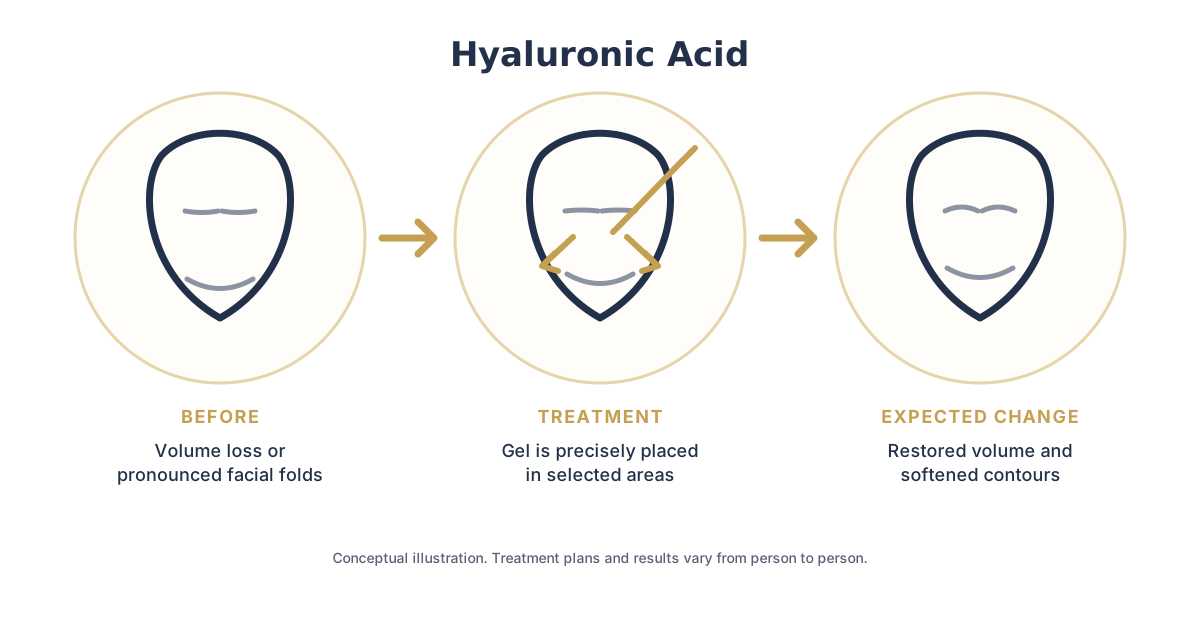
When used as a filler, hyaluronic acid is injected in a gel form directly into the target area, where it integrates naturally with existing tissue, restores lost volume, and attracts water to maintain hydration. Different formulations, varying in concentration, molecular size and cross-linking, are selected depending on the area being treated and the result required.
At ASG, all injectable treatments are performed or supervised by plastic surgeons. The precision of a surgical eye makes a significant difference to the naturalness and safety of filler results, particularly in complex areas such as the tear trough, jawline and lips.
Areas commonly treated
- Lips: definition, volume and symmetry
- Nasolabial folds (nose-to-mouth lines)
- Marionette lines (mouth corners)
- Tear trough (under-eye hollows)
- Cheekbones: volume and lift
- Jawline: definition and contouring
- Chin: projection and proportion
- Hands: volume restoration
The Treatment
What to Expect
Before the Treatment
A consultation is conducted to assess your facial anatomy, discuss your goals, and select the appropriate product and technique. A topical anaesthetic cream is applied to the treatment area 20–30 minutes before injections begin, ensuring comfort throughout the procedure.
During the Treatment
Hyaluronic acid is injected using fine needles or microcannulas depending on the area. Cannulas reduce bruising risk in more sensitive zones such as the under-eye or cheek. The session typically takes 20–30 minutes. Results are visible immediately and continue to settle over 1–2 weeks as swelling resolves.
After the Treatment
Most patients return to their normal day immediately. Minor swelling or redness at injection sites is common and resolves within 24–48 hours. You will be advised to avoid intense exercise, alcohol and sun exposure for 24 hours. A follow-up review is scheduled at two weeks to assess the result and address any refinements.
For UK Patients
Combining Fillers with a Visit to Lisbon
Hyaluronic acid treatments have no meaningful downtime, making them easy to combine with a short visit to Lisbon. Many UK patients choose to have filler treatments alongside a surgical consultation, or as a standalone appointment during a trip to Portugal.
Because results are immediate and any minor swelling resolves within 48 hours, there is no restriction on flying after treatment. You can travel home the same day or the following day without concern. There is no need for a follow-up in Lisbon; ongoing reviews are managed through our Oxford offices.
If you are visiting Lisbon for a surgical procedure and wish to add a non-surgical treatment at the same time, this can be discussed and planned at your consultation. Your surgeon will advise on the most appropriate sequence and timing.
Hyaluronic Acid
Are You a Suitable Candidate?
You have noticed volume loss, deepening lines or reduced definition in the face and want a natural, non-surgical improvement
You want results that are immediate but also reversible, hyaluronic acid can be dissolved if the outcome does not meet your expectations
You are in good general health, not pregnant or breastfeeding, and do not have active skin infections in the area to be treated
You have realistic expectations, fillers restore and enhance, but cannot replicate the structural change of surgery in cases of significant volume loss or skin laxity
You are not taking anticoagulant medication, or are able to pause it with your GP's approval ahead of treatment
Hyaluronic acid fillers are not recommended during pregnancy, while breastfeeding, or in the presence of autoimmune conditions affecting the skin. Your clinician will review your medical history in full at consultation.
Your Journey
From First Enquiry to Treatment
Initial Consultation
Your consultation, in person in Lisbon or Oxford, or via video call, covers your goals, facial anatomy, skin condition and medical history. Your clinician will recommend the most appropriate areas, products and technique, and set clear expectations about what is achievable.
Treatment Planning
A personalised treatment plan is agreed, including the areas to be treated, the volume to be used in each zone, and the session schedule. Some goals are best achieved over more than one session. Your clinician will advise on the optimal approach for your case.
The Treatment Session
Anaesthetic cream is applied, the areas are cleaned, and injections are performed using the technique best suited to the zone. The session takes 20–30 minutes. You will see an immediate improvement and will be given aftercare instructions before leaving the clinic.
Two-Week Review
A follow-up review at two weeks allows your clinician to assess the settled result and make any small refinements if needed. This review can be conducted in Lisbon, at our Oxford offices, or via video call for UK patients who have already returned home.
Ongoing Maintenance
As results last 6–12 months, many patients return for a maintenance session before the product fully metabolises. Regular treatment often requires progressively less product over time as the collagen-stimulating effects accumulate.
Important Information
Risks and Considerations
Hyaluronic acid fillers are among the safest non-surgical aesthetic treatments available, but all injectable procedures carry some risk. Complications are rare when treatment is performed by an experienced, medically qualified practitioner.
- Swelling and bruising at injection sites: common, typically resolving within 48–72 hours
- Asymmetry: minor differences in volume distribution, usually correctable at the two-week review
- Nodules or lumpiness: rare; usually resolves spontaneously or can be massaged out
- Infection: uncommon; managed with antibiotics if it occurs
- Allergic reaction: rare with modern hyaluronic acid products
- Vascular occlusion: very rare but serious; the risk is significantly reduced by surgical-level anatomical knowledge and the use of cannulas in high-risk zones
- All hyaluronic acid fillers used at ASG are reversible using hyaluronidase if needed
FAQs
Frequently Asked Questions
How long do hyaluronic acid fillers last?
Results typically last between 6 and 12 months, depending on the area treated, the product used, and individual factors such as metabolism and lifestyle. Areas with more movement, such as the lips, tend to metabolise the product more quickly. With regular treatment, some patients find the longevity improves over time.
Is the treatment painful?
Discomfort is minimal. A topical anaesthetic cream is applied before the procedure, and most hyaluronic acid products contain lidocaine within the formulation. Patients typically describe the sensation as mild pressure or a brief sting rather than pain. The use of cannulas in some areas further reduces discomfort.
Can the results be reversed?
Yes. Hyaluronic acid can be dissolved using hyaluronidase, an enzyme that breaks down the filler, if the result is not as expected or in the rare event of a complication. This is one of the key safety advantages of hyaluronic acid over permanent or semi-permanent filler products.
Is there any downtime after treatment?
Downtime is minimal. Some patients experience mild swelling or redness at injection sites for 24–48 hours, but most return to normal activities the same day. You are advised to avoid strenuous exercise, alcohol and prolonged sun exposure for 24 hours after treatment.
What is the difference between fillers and anti-wrinkle injections?
Fillers add volume and restore structure, they are used for lines caused by volume loss, hollows, and areas where enhancement or definition is desired. Anti-wrinkle injections (botulinum toxin) relax muscles to soften dynamic lines, wrinkles caused by repeated facial movement such as frowning or squinting. The two treatments are often complementary and can be combined in a single session.
Ready to Take the Next Step?
Book a consultation with our specialist team in Lisbon, with support available in Oxford for UK patients.