
Body Surgery
Liposuction in Portugal for UK Patients
Body contouring surgery in Lisbon for localised fat deposits, with surgeon-led assessment, recovery planning and follow-up support for UK patients.
Suitable for both aesthetic contouring and the surgical management of conditions such as lipedema. Not a weight-loss procedure.
Book a ConsultationBody Surgery
What is Liposuction?
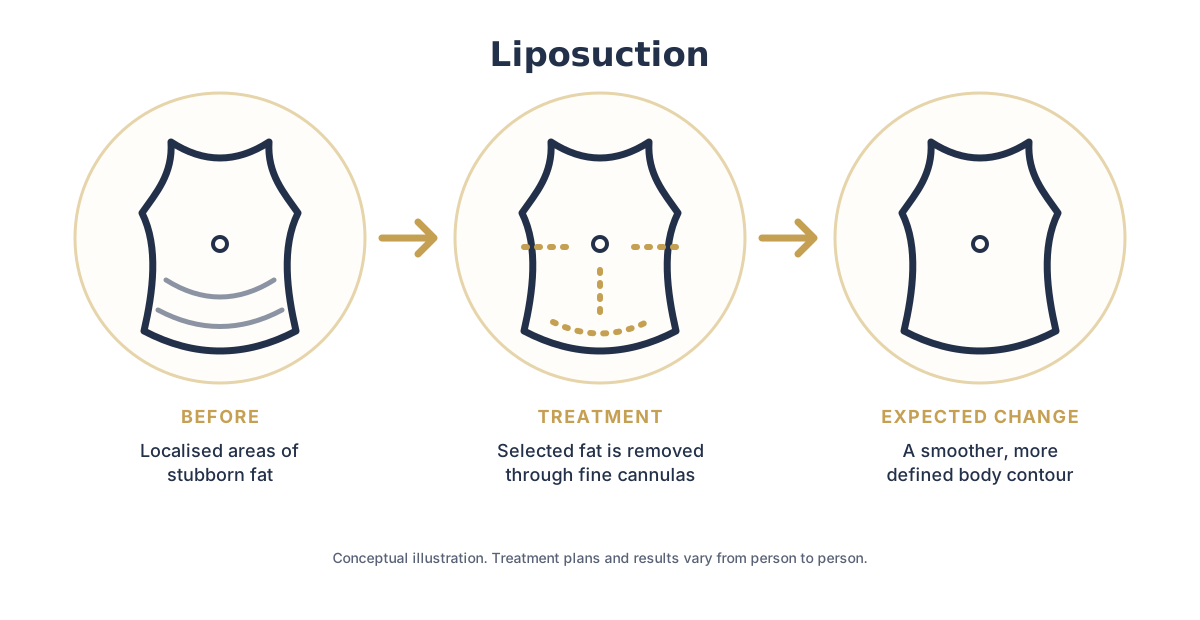
Liposuction (also known as liposculpture or lipoplasty) is a surgical procedure that removes localised fat deposits from specific areas of the body, such as the abdomen, flanks, thighs, upper arms, back, or chin, using fine cannulas introduced through small skin incisions of 3–5 mm.
It is important to understand that liposuction is not a weight-loss procedure. It is designed for patients who are already within a healthy weight range but have persistent areas of fat that do not respond to diet or exercise. The results are a more refined body contour with improved proportion between different areas of the body.
The harvested fat can also be transferred to other areas of the body, augmenting the buttocks, breasts, or face, in a procedure known as fat grafting or lipofilling. Beyond aesthetic contouring, liposuction also has established medical applications in the management of lipedema, lipomas, and certain rare metabolic conditions involving abnormal fat accumulation.
Areas commonly treated
- Abdomen and flanks
- Inner and outer thighs
- Upper arms and back
- Neck and chin
- Knees and ankles
- Chest (gynaecomastia)
Recovery & Aftercare
What to Expect
First Week
Swelling and bruising are expected. A compression garment is worn from day one. Discomfort is mild, most patients describe it as soreness rather than pain.
Weeks 2–6
Swelling gradually reduces and contour improvements become more visible. Most patients return to desk work within one to two weeks. The compression garment is worn continuously for six to eight weeks to help the skin adapt to the new contour.
Long-Term
Final results stabilise at around six months, once all swelling has resolved. Results are permanent, removed fat cells do not regenerate, provided weight remains stable. Manual lymphatic drainage sessions are recommended post-operatively to support healing and reduce swelling.
For UK Patients
Planning Liposuction in Lisbon
Liposuction typically involves a shorter and less demanding recovery than procedures such as abdominoplasty, making it one of the more straightforward body surgeries to plan around travel. For minor cases involving a single area under local anaesthesia, a brief stay in Lisbon is sufficient. For larger volume procedures under general anaesthesia, an overnight stay is recommended.
Flying is not advised for one month following surgery due to the risk of deep vein thrombosis. Most patients travel back to the UK by ground within five to seven days and manage their subsequent recovery from home, with follow-up provided by our Oxford nursing team from that point onwards.
Your consultation will clarify how many areas are suitable to treat in a single session, what anaesthesia is appropriate, and whether liposuction alone is sufficient or whether skin laxity, muscle separation, or weight considerations make a combined approach more suitable.
Beyond Aesthetics
Medical Applications of Liposuction
While liposuction is most commonly associated with aesthetic body contouring, it also has well-established medical uses in the management of certain conditions involving abnormal or problematic fatty tissue.
Lipedema is a chronic condition, predominantly affecting women, in which abnormal fatty deposits accumulate symmetrically in the legs, thighs and buttocks, causing pain, swelling and disproportionate weight distribution. Liposuction is one of the few treatments that can produce meaningful long-term improvement in lipedema symptoms and is performed with specific techniques adapted for the condition.
Lipomas are benign, slow-growing fatty nodules that develop under the skin. When they are large, uncomfortable, or cosmetically bothersome, liposuction can be used as a minimally invasive alternative to open excision for suitable cases.
In all medical applications, suitability is assessed individually. If you are seeking treatment for a medical condition rather than purely for aesthetic reasons, this should be discussed at consultation so that the approach can be planned accordingly.
Body Surgery
Are You a Suitable Candidate?
You have localised fat deposits in specific areas, such as the abdomen, flanks, thighs, arms, or back, that are resistant to diet and exercise
You are close to your ideal weight and not managing obesity
You have good skin elasticity, which helps the skin to adapt to the new contour
You have maintained a stable weight for at least 6 months
You understand that liposuction is a body contouring procedure, not a weight loss treatment
Liposuction is most effective when used to address localised, resistant fat, not as a substitute for weight management. Patients with poor skin elasticity may see contour irregularities as the skin may not fully adapt after fat removal. All suitability criteria are discussed at consultation.
Your Journey
Consultation Process for UK Patients
Initial Consultation
Your first consultation can be conducted via video call or in person at our clinic in Lisbon. This is an opportunity to discuss your goals, review your medical history, and ask any questions before any decisions are made.
Pre-operative Assessment
Pre-operative blood tests and medical clearance are completed before you travel to Lisbon. Your surgeon will provide clear pre-operative instructions, including guidance on medications, smoking, and nutrition.
Surgery in Lisbon
Your procedure takes place at our fully certified surgical facility in Lisbon. You will be supported throughout by our clinical team, with clear guidance on what to expect at every stage.
Recovery and Return
Recovery from liposuction is generally less demanding than from procedures such as abdominoplasty. Most patients are comfortable returning to normal activity within 1–2 weeks, though flying is not recommended for 1 month. A compression garment is worn for 6–8 weeks and manual lymphatic drainage is recommended to support healing. Follow-up care is provided by our Oxford nursing team.
Follow-up in Oxford
Post-operative follow-up is provided by our NMC-registered Advanced Nurse Practitioners in Oxford, ensuring your recovery is monitored by qualified professionals without repeated travel to Portugal.
Important Information
Risks and Considerations
Liposuction is a minimally invasive procedure with a relatively straightforward recovery. As with all surgery, risks include:
- Swelling and bruising: expected, and the primary source of discomfort in the first 1–2 weeks
- Contour irregularities or skin waviness: more likely in patients with reduced skin elasticity
- Temporary numbness or altered sensation in treated areas
- Seroma (fluid accumulation): uncommon, usually resolves without intervention
- Infection: rare with small incisions; managed with antibiotics
- Asymmetry of results
- Skin laxity: significant fat removal in patients with poor skin elasticity may result in loose skin
FAQs
Frequently Asked Questions
Is liposuction a weight loss treatment?
No. Liposuction removes localised fat deposits to improve body contour, but the amount of fat removed is limited. It is not intended as a treatment for obesity or as a substitute for diet and exercise. The best results are seen in patients who are already close to their target weight.
Which areas can be treated?
Liposuction can be performed on most areas of the body where localised fat accumulates, including the abdomen, flanks, inner and outer thighs, upper arms, back, neck, and knees. The most appropriate areas for your treatment will be discussed at consultation.
How long does the compression garment need to be worn?
A compression garment is typically worn for 6–8 weeks following liposuction to minimise swelling fluctuations and help the skin adapt to the new body contour.
When are final results visible?
Initial improvements in contour are visible within 4–6 weeks as swelling reduces. Final results stabilise at around 6 months, when swelling has fully resolved and the skin has fully adapted to the new contour.
Is manual lymphatic drainage recommended after liposuction?
Yes. Manual lymphatic drainage is strongly recommended following liposuction to help reduce swelling, improve tissue healing, and support the skin in adapting to the new contour. Your post-operative plan will include guidance on when to start and how many sessions are advisable.
Can liposuction be combined with other procedures?
Yes. Liposuction is frequently combined with abdominoplasty (lipoabdominoplasty) to address both skin laxity and localised fat deposits in the same procedure. It can also be performed as part of a Mommy Makeover or alongside breast surgery. Combination planning is discussed at consultation based on your anatomy and goals.
Ready to Take the Next Step?
Book a consultation with our specialist plastic surgery team in Lisbon, with pre and post-operative support available in Oxford.