Facial Surgery
Rhinoplasty in Portugal (Nose Surgery)
Surgical reshaping of the nose in Lisbon for UK patients, addressing proportion, profile, symmetry and, where needed, breathing function, with post-operative follow-up in Oxford.
One of the most technically demanding procedures in plastic surgery, requiring a surgeon with specific experience in both aesthetic and functional nasal anatomy.
Book a ConsultationFacial Surgery
What is Rhinoplasty?
Rhinoplasty is a surgical procedure to alter the shape, size or function of the nose. It is one of the most complex operations in facial plastic surgery, the nose occupies a central position on the face and its proportions affect the overall balance of every other feature. Even subtle changes can significantly improve facial harmony.
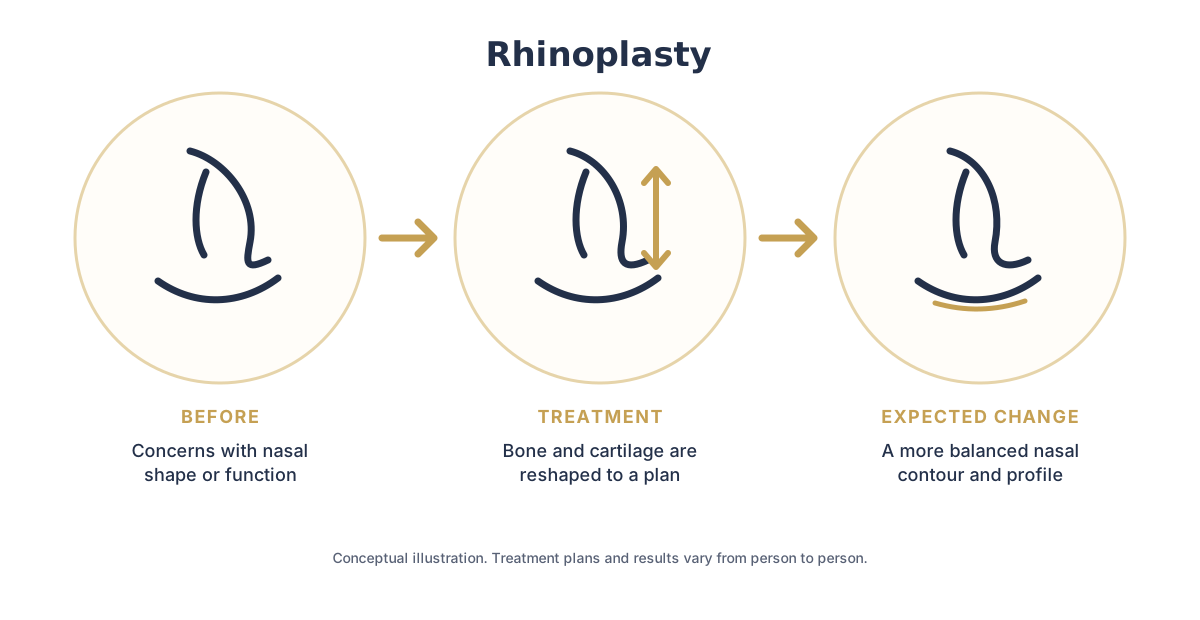
The procedure works by reshaping the underlying bone and cartilage structures of the nose. Depending on the goals, cartilage grafts from the nasal septum may be used for structural support or to refine the tip. The approach, open or closed, is chosen based on the degree of change required and the surgeon's assessment of nasal anatomy.
Rhinoplasty can be purely aesthetic, purely functional (correcting a deviated septum or structural obstruction that affects breathing), or a combination of both. Addressing functional and aesthetic concerns simultaneously avoids the need for two separate procedures.
Is this right for you?
- You are unhappy with the size, shape or proportions of your nose
- You want to refine a dorsal hump, bulbous tip, or wide base
- You have breathing difficulties related to structural nasal issues
- You have a nasal deformity following injury or previous surgery
- You have realistic expectations about the degree of change achievable
Surgical Approach
Open vs. Closed Rhinoplasty
Open Rhinoplasty
A small incision is made across the columella, the narrow strip of tissue between the nostrils. This exposes the full nasal structure, allowing greater precision and control. It is the preferred approach for more complex reshaping. Swelling takes longer to resolve but the scar is very discreet and typically imperceptible once healed.
Closed Rhinoplasty
All incisions are made inside the nostrils, leaving no visible external scar. This approach is suited to more limited corrections and carries a faster initial recovery. The trade-off is reduced access to nasal structures, which limits the degree of change that can be achieved.
Functional Rhinoplasty
When breathing difficulties are present, typically due to a deviated septum, enlarged turbinates or other structural abnormalities, these can often be corrected at the same time as aesthetic reshaping. Your surgeon will assess nasal function as part of the consultation and advise on the most appropriate combined approach.
Recovery & Aftercare
What to Expect
First Week
A protective splint is worn over the nose for at least one week following surgery. Mild bruising around the eyes and facial swelling are expected in the first three to four days. Minor bleeding in the first 24–48 hours is normal. Pain is typically mild and well managed with standard medication.
Weeks 2–4
The splint is removed at approximately one week. Visible bruising usually resolves within two to three weeks. Most patients feel comfortable returning to work and light social activities at around eight days, and can fly home from around day fifteen.
Long-Term
Subtle swelling, particularly in the nasal tip, continues to resolve gradually over twelve months. Final results should not be assessed before one year post-surgery. Strenuous exercise and contact sports should be avoided for two months. Results are generally permanent.
For UK Patients
Planning Rhinoplasty in Lisbon
Rhinoplasty requires one night in hospital following surgery. Most UK patients plan a stay of seven to ten days in Lisbon before travelling home, this allows time for splint removal, a post-operative review, and confirmation that you are comfortable to travel.
Flying is not advised for fifteen days following surgery. Return travel after the two-week mark is generally straightforward. All subsequent follow-up, including monitoring of swelling and healing progress, is managed by our Oxford nursing team.
It is important to set realistic expectations for the recovery timeline. The nose will be swollen and the splint in place for the first week, the initial appearance during this period is not representative of the final result. Patience is an essential part of the rhinoplasty journey, and your clinical team will guide you through each stage.
Rhinoplasty
Are You a Suitable Candidate?
You are dissatisfied with the size or shape of your nose and have felt this way consistently over time, not just briefly
Your facial growth is complete, rhinoplasty is generally not performed before the age of 17–18
You have a specific, articulable concern, a dorsal hump, wide tip, asymmetry, or breathing restriction, rather than a vague desire for change
You are in good general health and a non-smoker, or prepared to stop smoking for the period recommended by your surgeon
You have realistic expectations: rhinoplasty improves proportion and harmony, it does not create a different face
Rhinoplasty is one of the procedures most closely linked to patient expectations, and the gap between expectation and outcome is one of the most common sources of dissatisfaction. A thorough consultation, honest communication, and an experienced surgeon are essential to a good result. Your surgeon will discuss what is achievable for your specific anatomy.
Your Journey
Consultation Process for UK Patients
Initial Consultation
Your first consultation can be conducted via video call or in person in Lisbon. This is where your concerns, nasal anatomy, functional issues and aesthetic goals are discussed in detail. Photographs are reviewed and a realistic assessment of what is achievable is provided.
Pre-operative Assessment
Blood tests and medical clearance are completed before you travel. Your surgeon will provide specific instructions on smoking cessation, medications, and preparation for general anaesthesia.
Surgery in Lisbon
Rhinoplasty takes approximately two hours under general anaesthesia. One night in hospital is required following the procedure. You will be discharged the following day with a nasal splint in place and clear post-operative instructions.
Recovery in Lisbon
We recommend remaining in Lisbon for seven to ten days. The splint is removed at approximately one week, and a post-operative review confirms you are ready to travel. Flying is not recommended before day fifteen.
Follow-up in Oxford
All follow-up from the two-week mark onwards is managed by our NMC-registered Advanced Nurse Practitioners in Oxford, with clear guidance on monitoring swelling, protecting the nose, and when to expect your final result.
Important Information
Risks and Considerations
Rhinoplasty is a demanding procedure with a long recovery timeline before final results are visible. Risks will be discussed in full at consultation.
- Swelling: expected and can persist in the nasal tip for up to twelve months
- Bruising around the eyes: typically resolves within two to three weeks
- Infection: uncommon; managed with antibiotics
- Haematoma: rare but may require drainage
- Asymmetry or unsatisfactory aesthetic result: the most significant concern; risk reduced by choosing an experienced surgeon
- Breathing changes: rare; functional rhinoplasty aims to improve airflow, not reduce it
- Need for revision: rhinoplasty has one of the higher revision rates among cosmetic procedures; typically assessed no earlier than twelve months after surgery
FAQs
Frequently Asked Questions
What is the difference between open and closed rhinoplasty?
Open rhinoplasty involves a small incision across the columella (the tissue between the nostrils), which allows the surgeon full access to the nasal structure and greater precision for complex changes. Closed rhinoplasty uses incisions placed entirely inside the nostrils, leaving no visible scar, and is suited to more limited corrections. Your surgeon will recommend the most appropriate technique based on your anatomy and goals.
How long before swelling fully resolves?
Most visible bruising and swelling settles within two to three weeks. However, subtle swelling, particularly in the nasal tip, continues to resolve gradually over twelve months. Final results are not assessed before one year post-surgery. The nose may look slightly different at three months, six months, and one year as healing progresses.
Can rhinoplasty also correct breathing problems?
Yes. Rhinoplasty can be performed for functional as well as aesthetic reasons, or both simultaneously. Correction of a deviated septum, enlarged turbinates or structural obstruction can improve airflow and be addressed in the same operation as aesthetic reshaping, avoiding the need for two separate procedures.
What is the minimum age for rhinoplasty?
Rhinoplasty is generally not performed until facial growth is complete, typically around age 17–18 for women and slightly later for men. Your surgeon will confirm suitability at consultation.
Are results from rhinoplasty permanent?
Yes, results are generally permanent. The structural changes made to bone and cartilage are lasting. Natural ageing continues over time, but the improvements achieved by rhinoplasty are not reversed by this process. In rare cases, a revision procedure may be considered, but not before twelve months have passed.
Ready to Take the Next Step?
Book a consultation with our specialist plastic surgery team in Lisbon, with pre and post-operative support available in Oxford.