Body Surgery
Gynaecomastia Surgery in Portugal
Surgical reduction of enlarged male breast tissue in Lisbon for UK patients, combining glandular removal and liposuction for a flat, naturally contoured chest, with follow-up support in Oxford.
A condition affecting men of all ages that surgery can reliably resolve when other approaches have failed.
Book a ConsultationBody Surgery
What is Gynaecomastia?
Gynaecomastia is the benign enlargement of male breast tissue, caused by an imbalance between oestrogen and testosterone. It can affect one or both sides and ranges in severity from a small amount of puffiness beneath the nipple to more significant volume with skin laxity. It is more common than many men realise, occurring at various life stages, including puberty, middle age, and later life.
The condition can have several causes: hormonal shifts, certain medications (including anabolic steroids and some blood pressure drugs), obesity, genetic factors, or no identifiable cause at all. Importantly, losing weight can reduce fatty tissue in the chest but cannot eliminate the glandular component, which is firm tissue directly beneath the areola and does not respond to diet or exercise.
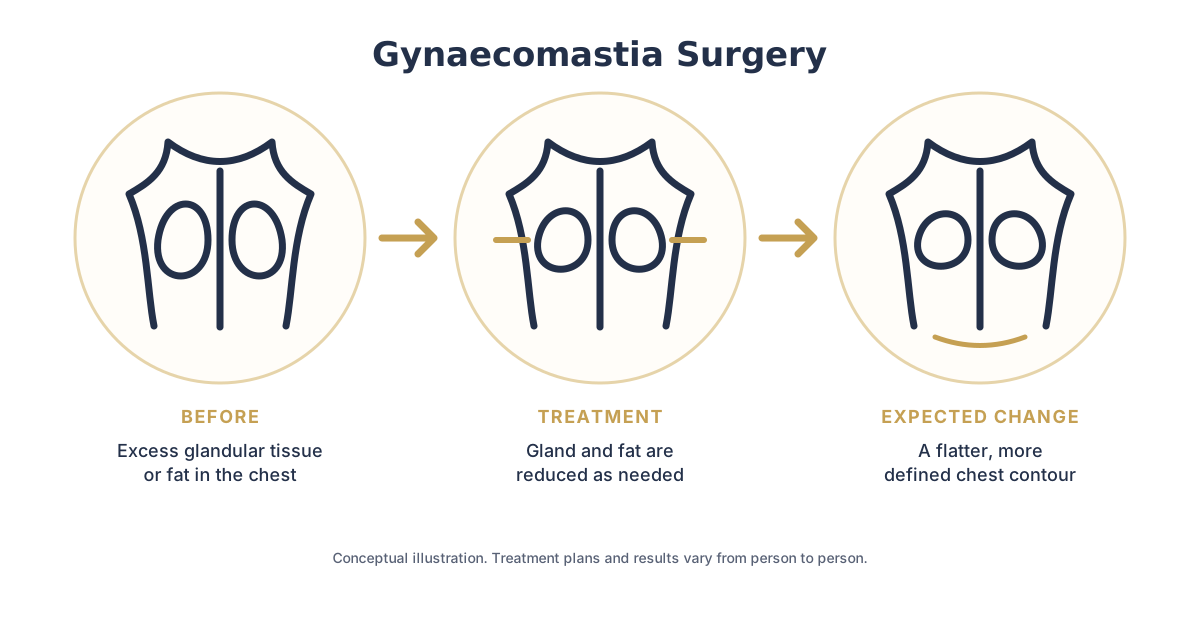
Surgical treatment combines two techniques: subcutaneous mastectomy, which removes the glandular tissue through a small incision at the base of the areola, and liposuction, which removes any excess fatty tissue through 3–4mm access incisions. Together, they produce a flat, naturally contoured male chest with very discreet scarring.
Is this right for you?
- You have persistent breast tissue enlargement that has not resolved with weight loss
- You feel self-conscious removing your shirt or during physical activity
- The enlargement has been present for more than two years
- You have ruled out any underlying medical cause with your GP
- You are in good general health and at a stable weight
Surgical Approach
How the Procedure Works
Subcutaneous Mastectomy
A small incision is made at the lower border of the areola, where the colour transition in the skin provides natural camouflage. Through this incision, the glandular breast tissue is removed. This is the only way to address the firm disc of tissue beneath the nipple that liposuction alone cannot resolve.
Liposuction
Fine cannulas are introduced through 3–4mm access incisions to remove the excess fatty tissue surrounding the glandular core. This refines the overall chest contour and ensures a smooth, natural-looking result across the pectoral area.
Skin Retraction
In most cases, the skin adapts naturally to the reduced volume as swelling resolves. Where skin laxity is a concern, the Renuvion® technology may be used to improve skin retraction without additional incisions or visible scarring.
Recovery & Aftercare
What to Expect
First Week
Mild discomfort, swelling and bruising are expected and well managed with standard pain relief. A compression garment is worn from day one and is essential for the first few weeks. Driving should be avoided for the first week.
Weeks 2–3
Swelling reduces significantly and most patients feel comfortable returning to desk work and light daily activities. The compression garment continues to be worn. Initial improvements in chest contour are visible, though final results take longer to develop.
Long-Term
Light physical activity can resume from one month and full exercise from two months. Results continue to improve as swelling fully resolves over three to six months. Scars at the areola border fade progressively and are typically very discreet by six months.
For UK Patients
Planning Gynaecomastia Surgery in Lisbon
As the procedure is performed under local anaesthesia with sedation and requires no hospital stay, it is straightforward to plan around travel. Most patients are comfortable to return to the UK within four to five days of surgery, once the initial swelling has settled and they have been reviewed by the surgical team.
Flying is generally suitable from around seven to ten days post-procedure. The compression garment is worn during travel and for several weeks afterwards, this does not significantly restrict daily activity or movement. Post-operative follow-up from the two-week mark is managed by our Oxford nursing team.
Many men find this procedure is something they have considered for years before acting on it. The consultation is entirely confidential, and the whole process, from first enquiry to follow-up, is handled with complete discretion.
Gynaecomastia
Are You a Suitable Candidate?
You have enlarged breast tissue that has been present for at least two years and shows no signs of resolving naturally
Weight loss has not resolved the issue, or the glandular component is firm and clearly separate from surrounding fatty tissue
Any underlying hormonal or medical causes have been investigated and excluded by your GP
You are at a stable weight, significant weight gain after surgery may reintroduce fatty tissue to the chest
You are a non-smoker or willing to stop smoking for the period recommended by your surgeon
In adolescents, gynaecomastia that develops during puberty will often resolve spontaneously within one to two years and surgery is generally deferred until this window has passed. In persistent cases in adults, spontaneous resolution is unlikely. All suitability is assessed individually at consultation.
Your Journey
Consultation Process for UK Patients
Initial Consultation
Your first consultation can take place via video call or in person at our Lisbon clinic. We will assess the degree of gynaecomastia, the likely mix of glandular and fatty tissue, and discuss the most appropriate surgical approach and expected outcome.
Pre-operative Assessment
Standard pre-operative preparation is completed before your visit. As the procedure uses local anaesthesia with sedation, requirements are straightforward. Your surgeon will advise on medications, smoking, and what to expect on the day.
Surgery in Lisbon
The procedure is performed at our clinic in Lisbon under local anaesthesia with sedation and takes approximately two hours. No hospital stay is required. You are discharged the same day wearing a compression garment with clear post-operative instructions.
Recovery and Return
Most patients are comfortable to travel back to the UK within four to five days. Flying is generally suitable from seven to ten days post-procedure. The compression garment is worn throughout and does not restrict normal travel or activity.
Follow-up in Oxford
Post-operative follow-up from the two-week mark is provided by our NMC-registered Advanced Nurse Practitioners in Oxford, ensuring your recovery is monitored without requiring further travel to Portugal.
Important Information
Risks and Considerations
Gynaecomastia surgery is well tolerated with a straightforward recovery. As with all surgery, risks exist and will be discussed in full at consultation.
- Swelling and bruising: expected and resolves progressively over several weeks
- Haematoma: uncommon; may require drainage if significant
- Seroma (fluid accumulation): rare; resolves with monitoring or aspiration
- Temporary altered sensation in the nipple or chest skin
- Infection: uncommon; managed with antibiotics
- Asymmetry: minor differences between the two sides may be present; significant asymmetry is rare
- Scarring: incisions at the areola border and liposuction access points are very discreet; keloid or hypertrophic scarring is rare
- Skin contour irregularity: more likely with larger volume removal; the compression garment helps the skin adapt
FAQs
Frequently Asked Questions
Will weight loss resolve gynaecomastia?
Not in most cases. While weight loss can reduce the fatty component of chest enlargement, the glandular tissue, the firm disc beneath the areola, is unaffected by diet or exercise. Surgery is the only reliable way to remove it. Your surgeon will assess the relative contribution of glandular versus fatty tissue at consultation.
Where are the scars?
The mastectomy incision is placed at the lower border of the areola, where the natural colour change in the skin provides camouflage. Liposuction access incisions are 3–4mm and placed discreetly. Both typically heal very well and become difficult to detect within a few months.
Is gynaecomastia associated with breast cancer?
No. Benign gynaecomastia is not associated with an increased risk of breast cancer. However, any new, asymmetric, rapidly growing, or painful lump in the male chest should be assessed by a doctor before surgery is considered, to exclude other causes.
Can gynaecomastia return after surgery?
The glandular tissue that is removed does not regenerate. However, if the underlying cause, such as medication use or hormonal imbalance, is not addressed, new tissue could potentially develop. Significant weight gain after surgery may also reintroduce fatty tissue. Your surgeon will advise on how to maintain the result.
How soon will I see results?
Initial improvements are visible within two to three weeks as the main swelling settles. Results continue to improve significantly over three to six months as residual swelling fully resolves and the skin adapts to the new contour.
Ready to Take the Next Step?
Book a consultation with our specialist plastic surgery team in Lisbon, with pre and post-operative support available in Oxford.