Body Surgery
Liposculpture in Portugal
Advanced body contouring in Lisbon for UK patients, combining targeted fat removal with strategic fat transfer to reshape, rebalance and refine the body's natural proportions.
Uses your own tissue to sculpt and enhance, with no external implants. Suitable for both aesthetic and select reconstructive applications.
Book a ConsultationBody Surgery
What is Liposculpture?
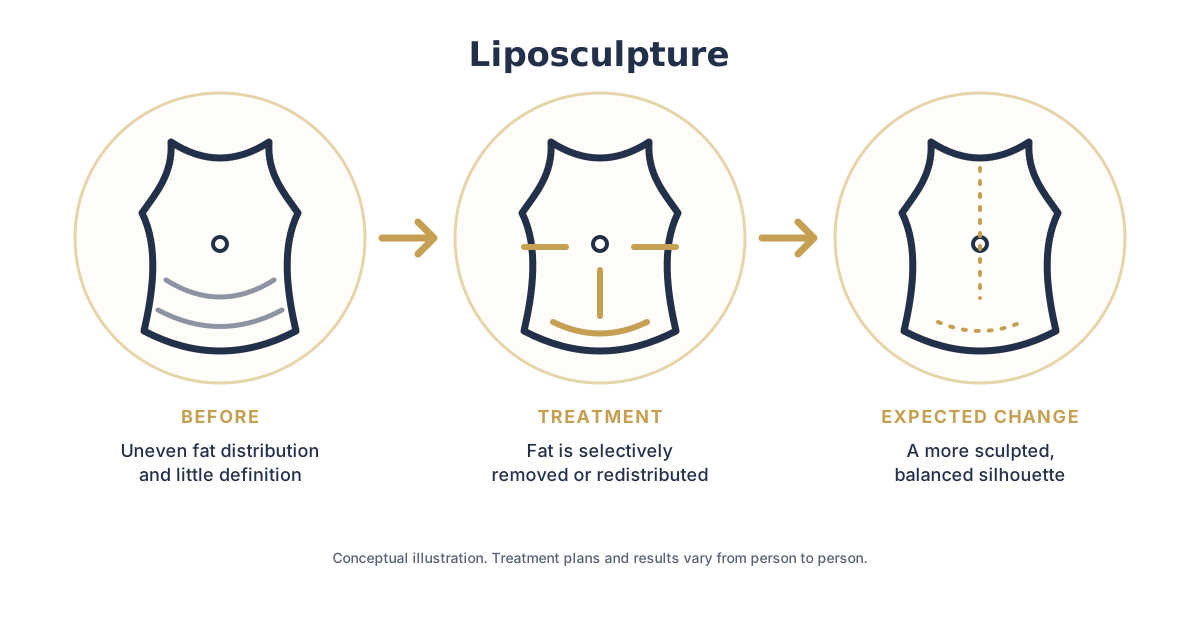
Liposculpture, also known as lipoplasty or fat grafting, is an advanced body contouring procedure that goes beyond standard liposuction. Rather than simply removing fat, the harvested fat is purified and selectively re-injected into areas where volume is lacking or where improved contour is desired. The result is a comprehensive reshaping that reduces where there is excess and enhances where there is deficit.
The procedure uses your own biological tissue, eliminating the need for synthetic implants, and can address multiple areas of the body in a single surgical session. Common donor sites include the abdomen, flanks, thighs and back. Common recipient sites include the buttocks, breasts, face and hands, as well as areas affected by asymmetry, depression or scarring.
Because liposculpture is a more complex and longer procedure than standard liposuction, it requires general anaesthesia and one night in hospital. It is a highly exacting technique that demands both surgical precision and a strong three-dimensional understanding of body proportions, the quality of the result depends significantly on surgical expertise.
Is this right for you?
- You want to reduce specific areas and enhance others in the same procedure
- You prefer to use your own tissue rather than synthetic implants
- You are close to your stable weight with localised fat available for transfer
- You want a comprehensive reshaping: not just fat removal
- You have realistic expectations about the degree of volume achievable through fat transfer
Surgical Approach
The Two-Stage Process
Stage 1: Fat Harvesting
Fat is removed from donor areas, typically the abdomen, flanks, thighs or back, using fine cannulas through small incisions. The technique is precise and careful to preserve the viability of the harvested fat cells, which is essential for a successful transfer. This also contours the donor area in the same way as standard liposuction.
Stage 2: Fat Purification & Transfer
The harvested fat is processed to remove fluid, oil and damaged cells, leaving only viable fat tissue. This purified fat is then injected in small quantities across multiple planes in the recipient area, whether the buttocks, breasts, face or elsewhere, to achieve natural-looking volume and contour.
Beyond Aesthetics
Liposculpture has well-established applications beyond aesthetic reshaping, including breast volume restoration following tumour removal, correction of depressed or atrophic scars, and improvement of acne scarring. Your surgeon will assess suitability for reconstructive applications at consultation.
Recovery & Aftercare
What to Expect
First Week
This is the most demanding period. Swelling, bruising and discomfort across both donor and recipient areas are expected and managed with prescribed analgesia. A compression garment is worn continuously. Temporary numbness and positional dizziness are normal. Rest is prioritised.
Weeks 2–4
Comfort levels improve significantly by the second week. Most patients can return to desk work and light daily activities from week three. The compression garment is worn for four to six weeks in total. Flying is not recommended for one month following surgery.
Long-Term
Full physical activity can resume from two months. Final contour results, in both donor and recipient areas, stabilise at around six months as swelling fully resolves and the transferred fat integrates. The fat cells that survive the transfer are permanent.
For UK Patients
Planning Liposculpture in Lisbon
Liposculpture is a longer and more involved procedure than standard liposuction, requiring general anaesthesia and one night in hospital. UK patients should plan to remain in Lisbon for seven to ten days following surgery before travelling home, allowing time for the initial post-operative review and confirmation that the donor and recipient sites are healing appropriately.
Flying is not recommended for one month due to the risk of deep vein thrombosis. Return travel is typically by ground or short-haul ferry within the first two to three weeks, with flying possible from around the four-week mark. The compression garment is worn during travel and does not significantly restrict movement.
Post-operative follow-up from the two-week mark is managed by our Oxford nursing team, so that ongoing monitoring does not require repeated travel to Lisbon. Your surgeon will advise on any specific restrictions related to the areas treated, particularly for fat transfer to the buttocks, where sitting positions need to be managed carefully in the early weeks.
Liposculpture
Are You a Suitable Candidate?
You have localised fat deposits in donor areas, abdomen, flanks, thighs or back, and also want to add volume or improve contour elsewhere
You are at a stable weight and exercise regularly, the best candidates have a good body weight with persistent localised fat, not overall obesity
Your skin has reasonable elasticity in the donor areas, poor skin quality may lead to contour irregularities after fat removal
You understand that not all transferred fat cells survive, a proportion is naturally reabsorbed, and the degree of volume achieved can vary
You are in good general health, a non-smoker, and at or close to your target weight
Liposculpture is not a weight-loss procedure. The best results are achieved in patients who are already close to their ideal weight and want targeted reshaping and rebalancing. The amount of fat available for transfer limits what can be achieved in recipient areas, this is assessed at consultation.
Your Journey
Consultation Process for UK Patients
Initial Consultation
Your first consultation can be conducted via video call or in person at our Lisbon clinic. We will assess donor sites, recipient goals, skin quality, and advise on what is realistically achievable with the fat available. Both removal and transfer plans are discussed together.
Pre-operative Assessment
Blood tests, medical clearance and anaesthesia assessment are completed before your visit. Your surgeon will provide detailed instructions on preparation, including smoking cessation, medications, compression garment procurement, and travel logistics.
Surgery in Lisbon
Liposculpture is performed at our fully certified surgical facility in Lisbon under general anaesthesia. The procedure takes three to five hours depending on the areas being treated. One night in hospital is required. You will be discharged the following day in a compression garment.
Recovery in Lisbon
We recommend remaining in Lisbon for seven to ten days for a post-operative review and to ensure both donor and recipient areas are progressing well. Flying home is not recommended for one month. Ground travel within two to three weeks is generally appropriate.
Follow-up in Oxford
All follow-up from the two-week mark is managed by our NMC-registered Advanced Nurse Practitioners in Oxford, with clear guidance on compression garment use, activity restrictions, and monitoring of transferred fat integration.
Important Information
Risks and Considerations
Liposculpture is a more complex procedure than standard liposuction and carries the risks associated with both fat removal and fat transfer. Your surgeon will discuss these in full at consultation.
- Swelling and bruising across both donor and recipient areas: expected, resolving progressively over weeks
- Partial fat reabsorption: a proportion of transferred fat is naturally reabsorbed; the degree varies between patients
- Contour irregularities: more likely with large-volume removal or in patients with reduced skin elasticity
- Temporary numbness or altered sensation in treated areas
- Infection: uncommon; managed with antibiotics
- Asymmetry: minor differences between sides may occur
- Deep vein thrombosis: a risk with longer procedures under general anaesthesia; prevented with anticoagulation and compression
- Scar appearance: incisions are small and discreet; hyperpigmentation or irregularity is possible but uncommon
FAQs
Frequently Asked Questions
What is the difference between liposculpture and liposuction?
Standard liposuction removes fat from specific areas to reduce volume and improve contour. Liposculpture goes further, the harvested fat is purified and re-injected into areas where volume enhancement is desired. It addresses both excess and deficit simultaneously, producing a more comprehensive reshaping of the body.
How much of the transferred fat survives?
Not all transferred fat cells integrate successfully, a proportion is naturally reabsorbed by the body over the weeks following surgery. Survival rates vary between patients and technique, and it is not possible to predict exactly how much volume will remain at six months. Your surgeon will account for this when planning the transfer volumes.
Can liposculpture be used for breast augmentation?
Yes. Fat transfer to the breasts can provide a modest, natural increase in volume without implants. It is best suited to patients seeking subtle enhancement, typically one to one and a half cup sizes, rather than a significant size change. It is also used in selected reconstructive contexts following surgery for breast cancer.
How long do results last?
Fat cells removed from donor areas do not regenerate, reductions in those areas are permanent provided weight remains stable. Fat cells that survive the transfer process also behave like normal fat tissue, they are permanent but will expand or contract with weight changes. Final contour results stabilise at around six months.
Is liposculpture suitable for both men and women?
Yes. Liposculpture is performed for both men and women. Treatment planning and goals differ, men typically seek improved chest and abdominal definition, while women more commonly want waist reduction combined with buttock or breast enhancement, but the underlying technique is the same.
Ready to Take the Next Step?
Book a consultation with our specialist plastic surgery team in Lisbon, with pre and post-operative support available in Oxford.